Developing Employee Integration Apps: A Practical Guide
Developing Employee Integration Apps involves creating digital tools that streamline the onboarding, communication, and collaboration processes for employees within an organization. These apps are designed to enhance user experience by providing a centralized platform where employees can access information, complete tasks, and interact with colleagues seamlessly. Unlike generic mobile applications, employee integration apps focus specifically on internal workflows and organizational needs.
The distinctiveness of Developing Employee Integration Apps lies in their tailored approach to user interaction. While many mobile apps cater to consumer behavior, these apps prioritize functionality, security, and efficiency for enterprise environments. This makes them ideal for companies looking to improve internal operations without compromising on data protection or usability.
Understanding the Unique Features of Employee Integration Apps
Employee integration apps often incorporate features such as real-time notifications, task management systems, and secure data sharing. These elements ensure that employees remain informed and engaged throughout their workday. The design of these apps also emphasizes simplicity and accessibility, making it easier for users of all technical backgrounds to navigate and utilize the platform effectively.
When compared to other types of mobile applications, employee integration apps differ in their focus on internal communication and workflow automation. For example, while social media apps prioritize user engagement and content sharing, employee integration apps aim to reduce administrative burdens and improve productivity. This distinction is crucial when selecting the right tool for an organization’s specific needs.
Comparing Employee Integration Apps with Alternatives
There are several alternatives to Developing Employee Integration Apps, including general-purpose project management tools, internal messaging platforms, and custom-built software solutions. Each of these options has its own set of advantages and limitations, depending on the size of the organization and the complexity of its operations.
- Project Management Tools: These are often used for tracking tasks and deadlines across teams. While they offer flexibility, they may lack the specialized features required for employee onboarding and internal communication.
- Internal Messaging Platforms: These provide a way for employees to communicate quickly and efficiently. However, they may not integrate well with other business systems, leading to fragmented workflows.
- Custom-Built Software: This option allows for complete customization but can be time-consuming and expensive to develop and maintain.
Each of these alternatives has its place, but Developing Employee Integration Apps offers a more cohesive solution for organizations that require a unified platform for employee engagement and operational efficiency.
Key Considerations When Choosing an Employee Integration App
Selecting the right employee integration app involves evaluating several factors, including scalability, security, and ease of use. Organizations should consider how the app will integrate with existing systems and whether it supports the specific needs of their workforce.
Scalability is a critical factor, especially for growing businesses. An app that works well for a small team may not be suitable for a larger organization with complex workflows. Security is another important consideration, as employee integration apps often handle sensitive company data and personal information.
Usability is equally important. Even the most advanced app will fail if employees find it difficult to navigate or understand. A well-designed interface, clear instructions, and intuitive controls can significantly impact user adoption and satisfaction.
Best Practices for Developing Employee Integration Apps
When developing an employee integration app, it’s essential to follow best practices that ensure the final product meets both functional and aesthetic standards. One of the first steps is to define the app’s core objectives and target audience. This helps in determining the necessary features and design elements.
Creating a user-centered design is crucial. This involves conducting user research, gathering feedback, and iterating on the design based on real-world usage. A well-structured UI/UX framework ensures that the app is not only visually appealing but also easy to use.
Another key practice is to prioritize performance and reliability. An app that is slow or prone to crashes can frustrate users and undermine its effectiveness. Testing the app thoroughly under different conditions helps identify and resolve potential issues before launch.
Designing Mobile App Screens for Employee Integration
The design of mobile app screens plays a significant role in the overall user experience. For employee integration apps, the screen layout should be clean, organized, and easy to navigate. This includes using consistent color schemes, typography, and iconography to create a cohesive visual identity.
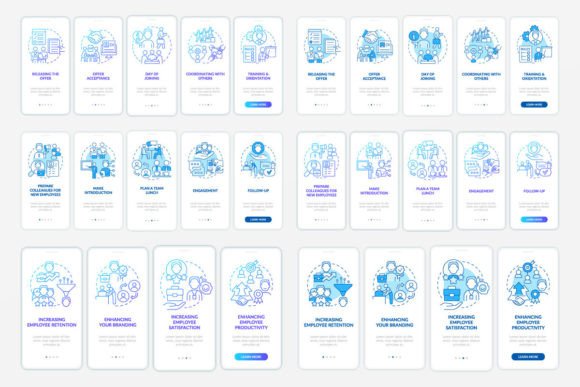
Three blue gradient mobile app screens are commonly used in employee integration apps to represent different sections of the application. These screens typically include a dashboard, a task management interface, and a communication hub. Each screen is designed to convey specific information and enable users to perform actions efficiently.
The use of Myriad Pro-Bold and Myriad Pro-Regular fonts adds a professional and modern look to the app. These fonts are widely used in corporate and business settings due to their readability and versatility. They help maintain a consistent visual language throughout the app, reinforcing brand identity and user trust.
In addition to typography, the choice of icons and graphics is essential. Icons should be simple, recognizable, and relevant to the functions they represent. High-quality images and illustrations can also enhance the user experience by making the app more engaging and informative.
Product File Formats and Design Resources
When developing employee integration apps, it’s important to have access to high-quality design resources. These include product files in various formats such as EPS, JPEG, AI, SVG, and PNG. Each format serves a specific purpose, from vector-based illustrations to transparent background images.
EPS and AI files are ideal for scalable graphics that can be resized without losing quality. JPEG and PNG files are commonly used for photographs and images that require a white or transparent background. SVG files offer a flexible and responsive option for icons and graphics that need to adapt to different screen sizes.
Access to these file formats ensures that designers and developers can create and modify assets efficiently. It also allows for seamless integration into the app’s interface, maintaining a consistent and polished appearance.
Exploring Additional Design Elements
Beyond the core app screens, there are additional design elements that contribute to the overall user experience. These include brochures, infographics, and other marketing materials that support the app’s branding and messaging.
Brochures can be used to explain the app’s features and benefits to stakeholders and potential users. Infographics provide a visual way to present complex information, making it easier for users to understand and retain key details. These materials help reinforce the app’s value proposition and support its adoption within an organization.
By incorporating these design elements, organizations can create a comprehensive and cohesive brand presence that aligns with their goals and objectives.
Staying Updated with New Topics and Offers
The field of employee integration apps is constantly evolving, with new topics, features, and offers emerging regularly. Staying informed about these developments can help organizations make better decisions and stay ahead of the competition.
Subscribing to updates from providers like BSD Studio ensures access to the latest insights, trends, and resources. These updates often include new design templates, mobile app screen sets, and other valuable tools that can enhance the development process.
By keeping up with industry changes, organizations can continue to refine their approach to employee integration and maintain a competitive edge in the market.